Thriving Together:

Flourishing, Future-Ready Youth

Finding balance and belonging in a tech-filled world

Today’s youth are the most digitally connected generation in history—

yet many report feeling more alone, anxious, or overwhelmed than ever before. Across the nation and here at home, youth wellbeing has declined as technology has become more woven into everyday life.

Our Shared Vision: Flourishing, Future-Ready Youth

Young people are telling us what they need—and they are ready to lead the way. When youth, families, schools, and community partners align around what truly helps young people thrive, lasting change is possible. Together we can shape a future where every young person experiences balance, belonging, and purpose—online and offline.

Flourishing means having all the ingredients for a good life. It’s more than the absence of stress or illness. It’s feeling connected, having a sense of purpose, growing through challenge, and knowing you matter.

Future-ready goes beyond academics or job skills. It includes the life skills young people need to succeed in any path they choose—strong relationships, problem-solving, perseverance, teamwork, and the ability to use technology with intention.

This vision was shaped with and by our youth, grounded in their lived experience and reinforced by research.


Through hundreds of youth-led interviews and community conversations, our community identified four essential ingredients for flourishing. These ingredients show up again and again in research as well.

None of the ingredients for flourishing can happen without using tech with intention.
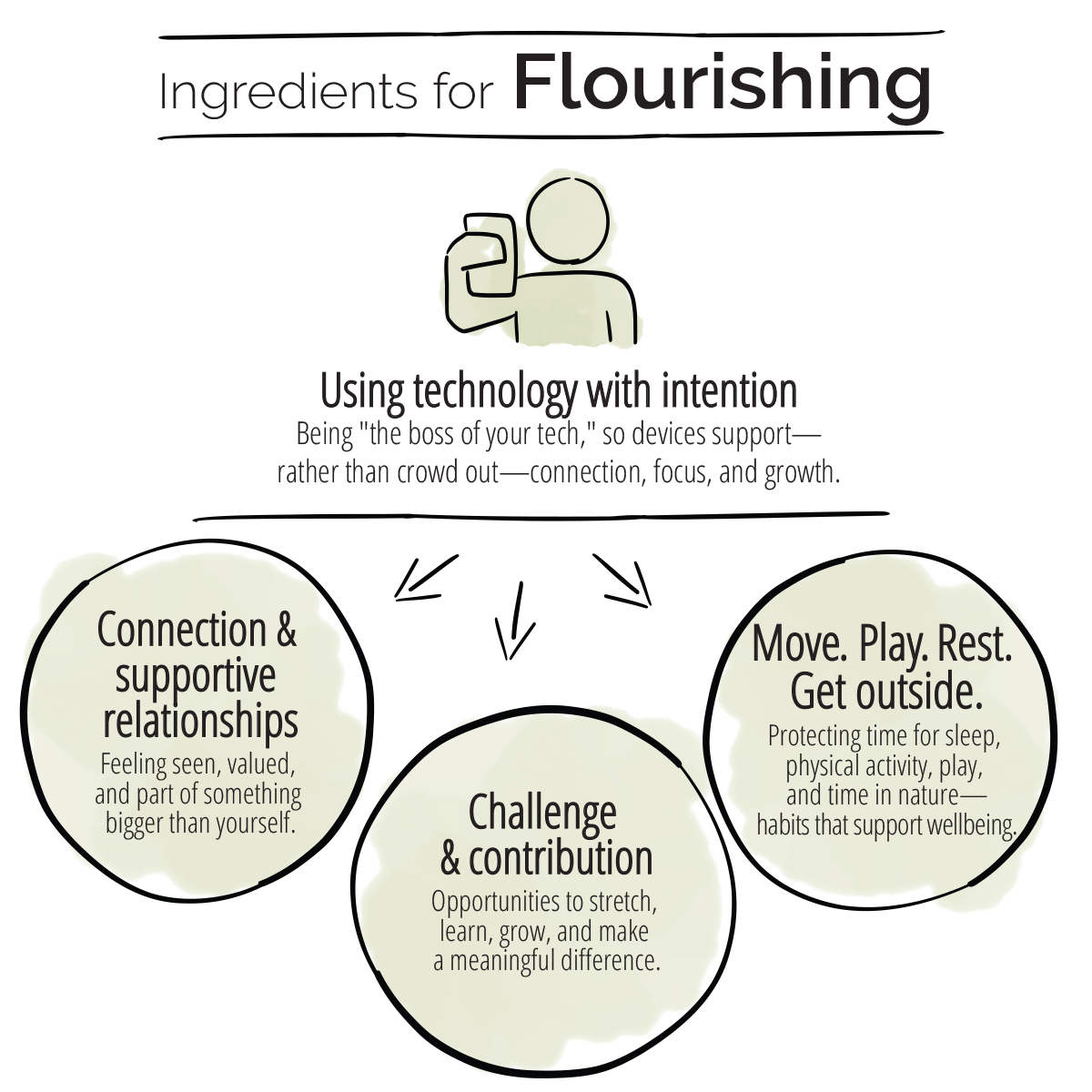

Diagram of Ingredients for flourishing


Our Thriving Together Recommendations

These recommendations are not about perfection. They are about timing, balance, and skill-building—and about protecting the ingredients young people need to flourish.


  • Lead with the ingredients of wellbeing
    Young people thrive when daily life includes strong relationships, opportunities to persevere and contribute, and time for movement, play, rest, and reflection. Intentional use of tech leaves space for the habits that create wellbeing.
  • Delay smartphones until 9th grade
    Middle school is a critical window for brain development, identity formation, and friendships. Waiting allows young people to build confidence, independence, and healthy habits before adding an always-on device.
  • Delay social media until age 16
    Social media platforms are designed for adult brains. Delaying use helps protect teens during a sensitive developmental period and reduces exposure to comparison, pressure, and sleep disruption.
  • Support phone-free schools (bell-to-bell)
    Phone-free school days reduce distraction, improve focus, and increase face-to-face connection. Phone-free schools report stronger engagement and fewer behavior issues.
  • Teach young people how to use tech with intention
    Young people don’t just need rules—they need skills. This includes:
    • Age-appropriate instruction and curriculum
    • Creating distraction-free times and spaces at home, school, and in the community
    • Adults modeling healthy digital habits
  • Advocate for policies that protect youth wellbeing
    Families and schools can do a lot, but platform design matters. Advocacy for safer, more developmentally appropriate technology is part of creating a healthier digital environment. Advocacy in Action: Click here to view our testimony before the WI Assembly Speaker’s Task Force on Protecting Kids.


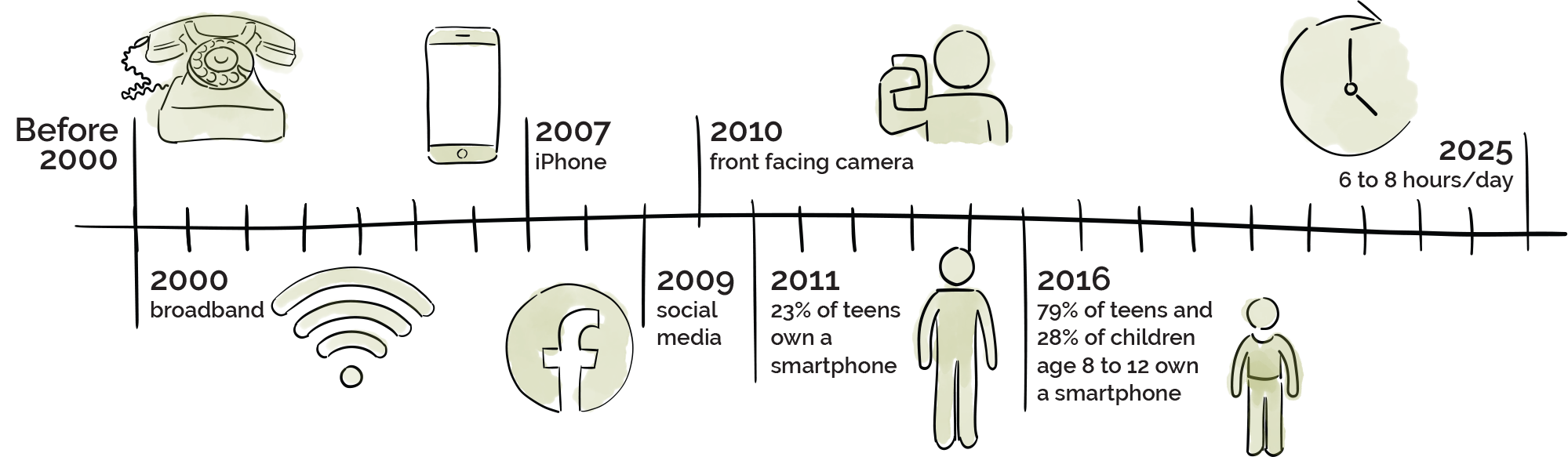
Over the past decade, youth mental health challenges have risen sharply during the same period that smartphones and social media became part of everyday childhood. Local data from Dodge and Jefferson Counties mirrors national and global trends, with increases in anxiety, depression, sleep disruption, and feelings of not belonging.

timeline of device use

National Data

Rapid changes in how we live and connect mean kids are spending more time on screens—and less time on the things that build wellbeing.

  • Teens now spend 5 hours per day on social media alone.
  • In-person connection has dropped sharply —today’s teens spend 50% less time socializing than their parents did twenty years ago.
  • Less play, outdoor activity, and sleep are crowding out the habits that support health and happiness.

Large-scale studies reinforce these concerns:

  • A Global Minds Project study of more than 2 million youth in 163 countries found that owning a smartphone before age 13 is associated with significantly poorer mental health and wellbeing in early adulthood.
  • A study of more than 10,000 youth published in the Journal of Pediatrics found that children who owned smartphones by age 12 had:
    • 31% higher odds of depression
    • 62% higher odds of insufficient sleep
    • 40% higher odds of obesity


Local Snapshot: Dodge and Jefferson Counties

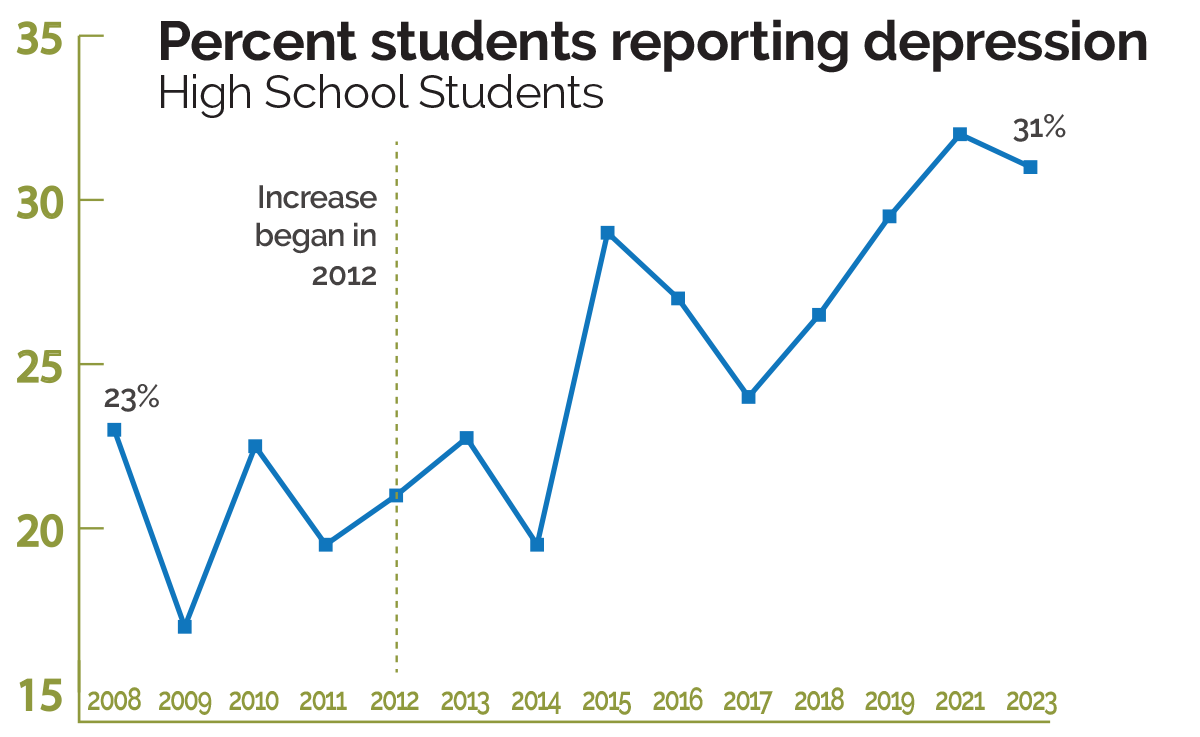
Since smartphones became widespread in 2012, rates of teen depression and anxiety have climbed across the globe—and our local data tells the same story. From the latest Youth Risk Behavior Survey (4,000 local high school students):

  • 1in 2 say anxiety interferes with daily life.
  • More than half feel they don’t belong at school.
  • 1 in 5 are online between midnight and 5 am at least 4 nights per week.
  • Only 16% of high school students feel they get the help they need.

Chart showing percentage of students reporting depression


550 parents completed an on-line survey on the topic of youth wellbeing in the digital world. They told us:

  • Almost ¾ of parents admitted their own smartphones sometimes distract from quality family time.
  • 83% believe children should wait until high school for social media.
  • 59% say children should not have unrestricted internet access until "after high school".
  • 82% support policies that limit cellphone use during the school day.

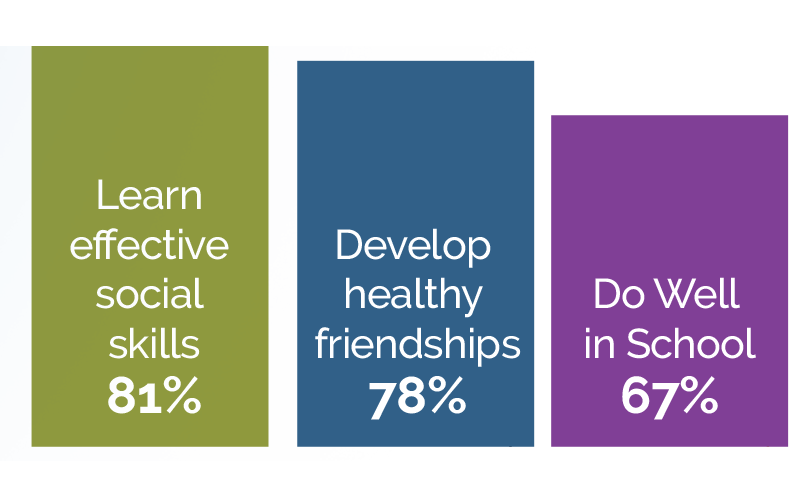
Percent of parents believing that smarphone use negatively impacts the ability for children under age 12 to:

chart showing negative impact


We asked teens a simple but powerful question:

"When do you feel most happy, energized, and fully alive?"

Their answers closely mirrored the ingredients of wellbeing.

Young people talked about meaningful connection—time with friends and family where phones don’t dominate. They described the satisfaction of challenge and growth, the importance of sleep and movement, and a deep desire to contribute and help others. They were thoughtful and nuanced about technology—not rejecting it, but asking to use it more intentionally.

The takeaway is clear: young people already understand what helps them thrive. They are ready to be partners—and leaders—in shaping environments that make flourishing easier.


"There needs to be more human connection. Technology is great—until it takes over."

"We need to push ourselves outside our comfort zones."

"Being kind and helpful actually makes you feel better."

"Social media can be helpful and harmful. We need to talk about both."

Nearly half of U.S. children now own a smartphone by age 11. Once habits form, they are hard to undo. These recommendations help us slow things down—protecting time for:

  • Real-world friendships and belonging
  • Sleep, movement, and time outdoors
  • Learning how to focus, cope, and contribute

When families, schools, and communities align around shared expectations, young people don’t feel singled out—they feel supported. Thriving Together is not about going backward. It’s about moving forward with intention, so every young person can grow up healthy, connected, and future-ready.

Our Community Journey—Shaped by Youth

This journey began with listening.

More than 1,000 community members across Dodge and Jefferson Counties shared their hopes and concerns about youth wellbeing in a rapidly changing digital world. At the heart of this work were two dozen student leaders, who conducted more than 200 interviews with peers, parents, educators, and community leaders—asking what truly helps young people thrive.

These youth-led insights shaped the Thriving Together Summit, where 120 students, parents, and community leaders came together to imagine a future where every young person feels connected, supported, and equipped with opportunities to grow.

One message came through loud and clear: young people are ready to lead. They want healthier digital norms, more chances to connect in person, and more opportunities to grow their strengths and contribute. They are asking adults to walk alongside them—not to fix things for them.

thriving together

Join the Movement

When youth, families, schools, and community partners work side by side, young people flourish—and our whole community benefits.

We invite schools, nonprofits, faith communities, businesses, civic groups, and local leaders to join us in shaping and adopting a regional strategy for Flourishing, Future-Ready Youth—and to elevate young people as ambassadors of this work.

Together, we can ensure every child has what they need to thrive—online, offline, and everywhere in between. Contact us to join the movement or schedule a conversation.


inspiration, announcements, and impact updates... monthly.